Narde & Backgammon
Rules, strategy and glossary for every backgammon variant — in your language.

-
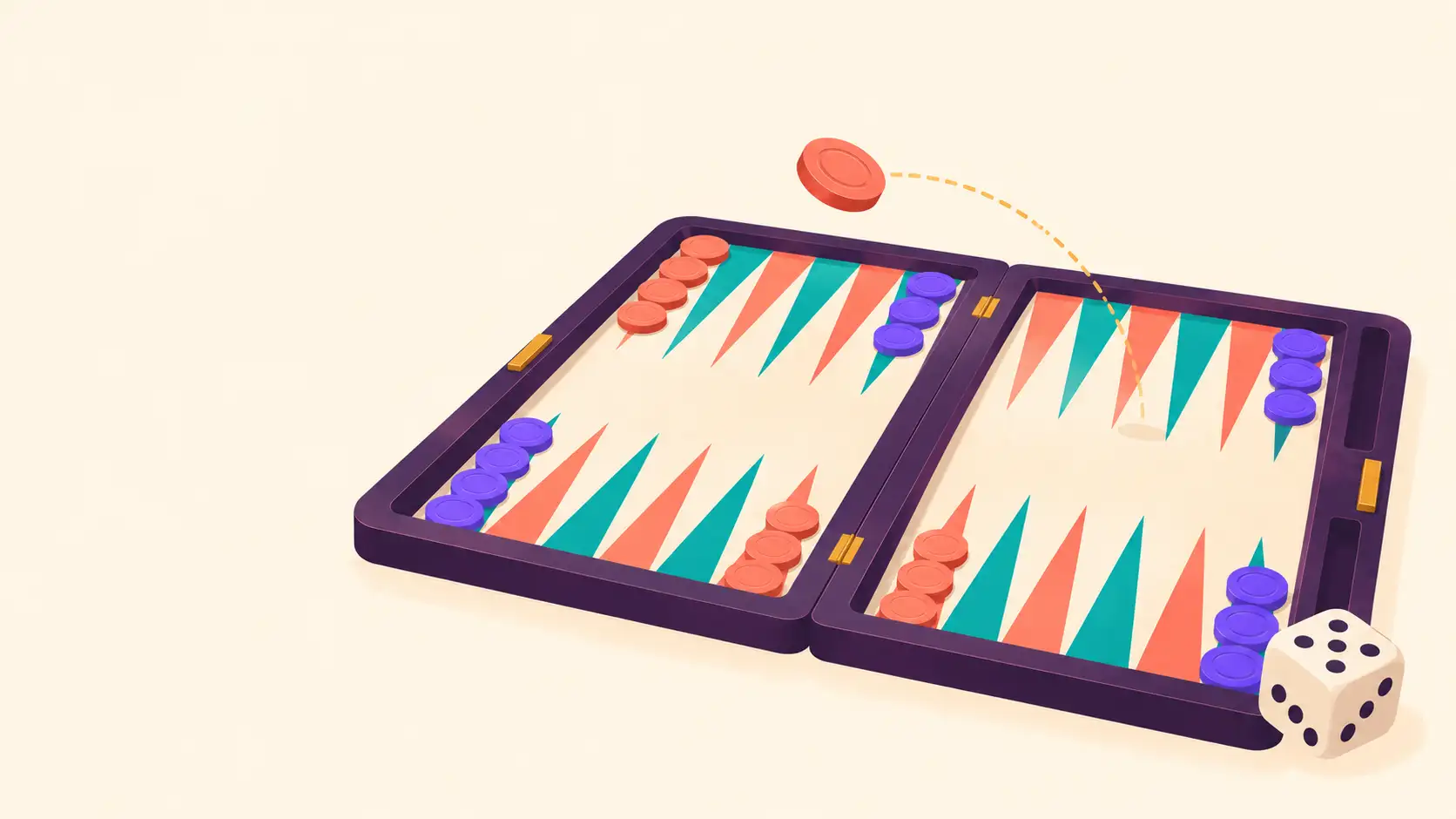
Narde: Rules
How to play Narde — setup, moves, the head rule, bearing off and how the game is won.
-

Strategy of Narde: How to think about the position
One checker from the head, capturing the opponent's home point, the rail, and a shortage of moves — what the game in which you cannot hit is made of.
-

Capturing the opponent's base: two zones of attack
Where to place checkers at the opponent's Head, how many points you need, when attack matters more than defence, and when it is time to come out of it.
-
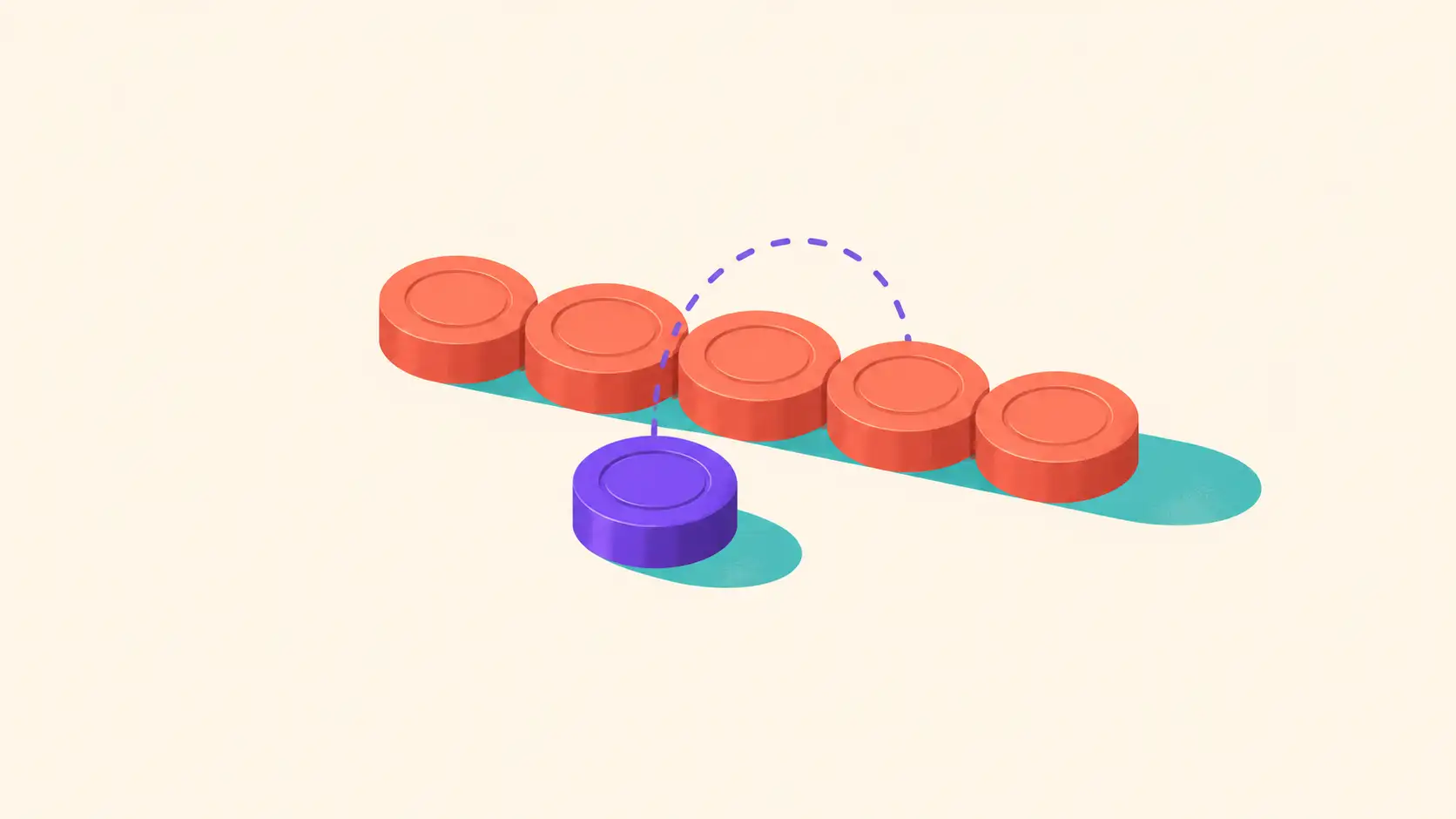
Fence in Narde: three, four, five, six
How many checkers make the barrier dangerous, where to place it, what it is vulnerable to, and how to deal with it. An analysis of the game in which hitting is not allowed.
-
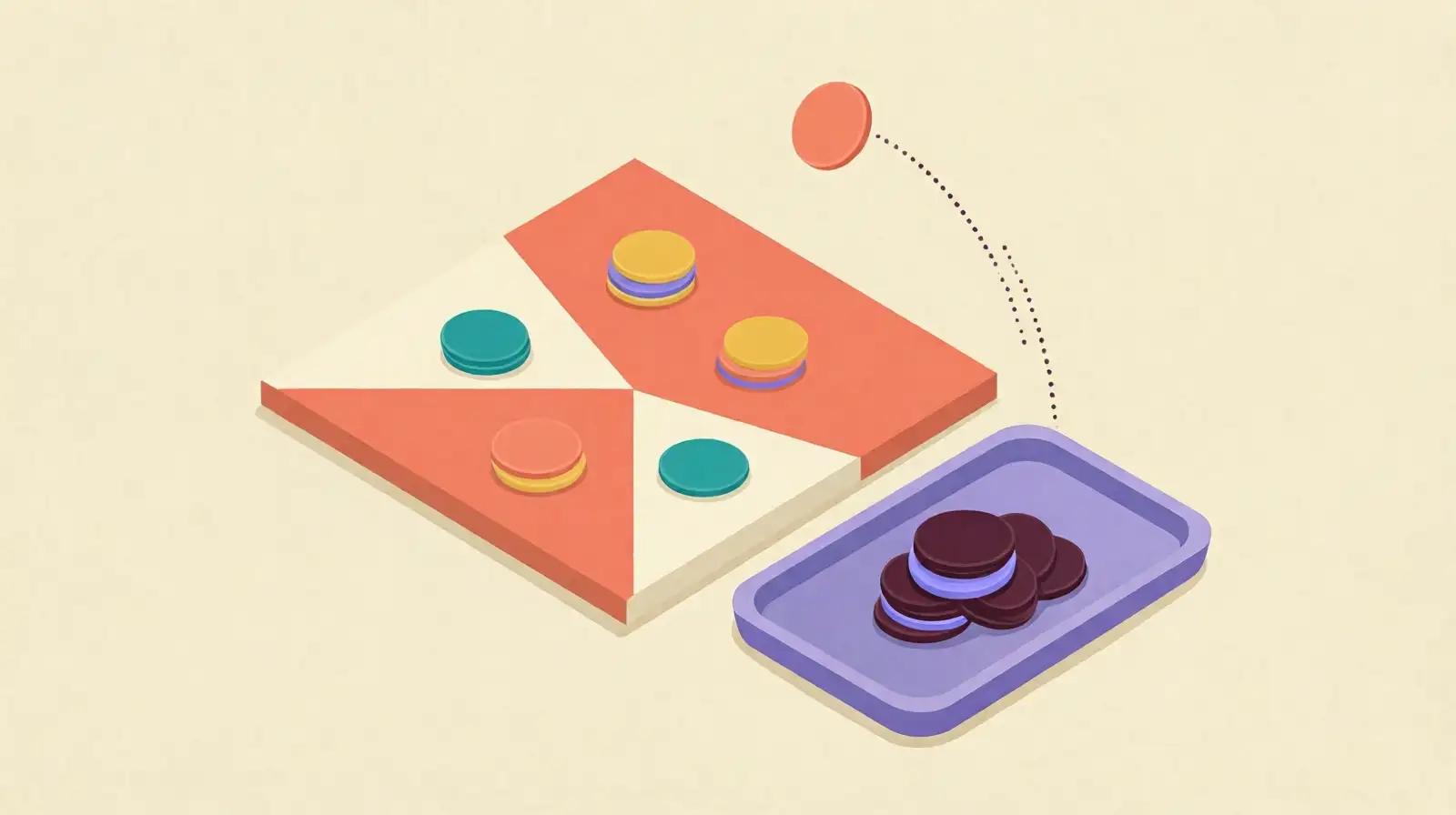
Bringing checkers Home and bearing off: where the pips go
When to rebuild into your Home, where to put checkers as they come in, why an even Home bears off faster, and where the game loses moves.
-
Narde: Glossary
The terms of Narde — head, home, wall, Oin, Mars and Coke — defined, with their Russian and Turkish equivalents.
-
Scoring in Narde: oin, mars, Coke and the home Mars
What a win is worth: one point, two for a mars, three for Coke and four for a home mars. Plus the draw, which backgammon does not have.
-

The history of Narde: from Khosrow's vizier to a sporting rank
Five thousand years, ten days to invent it, the game in eighteenth-century Russian texts and a first championship in 1947: the history of Narde.
-
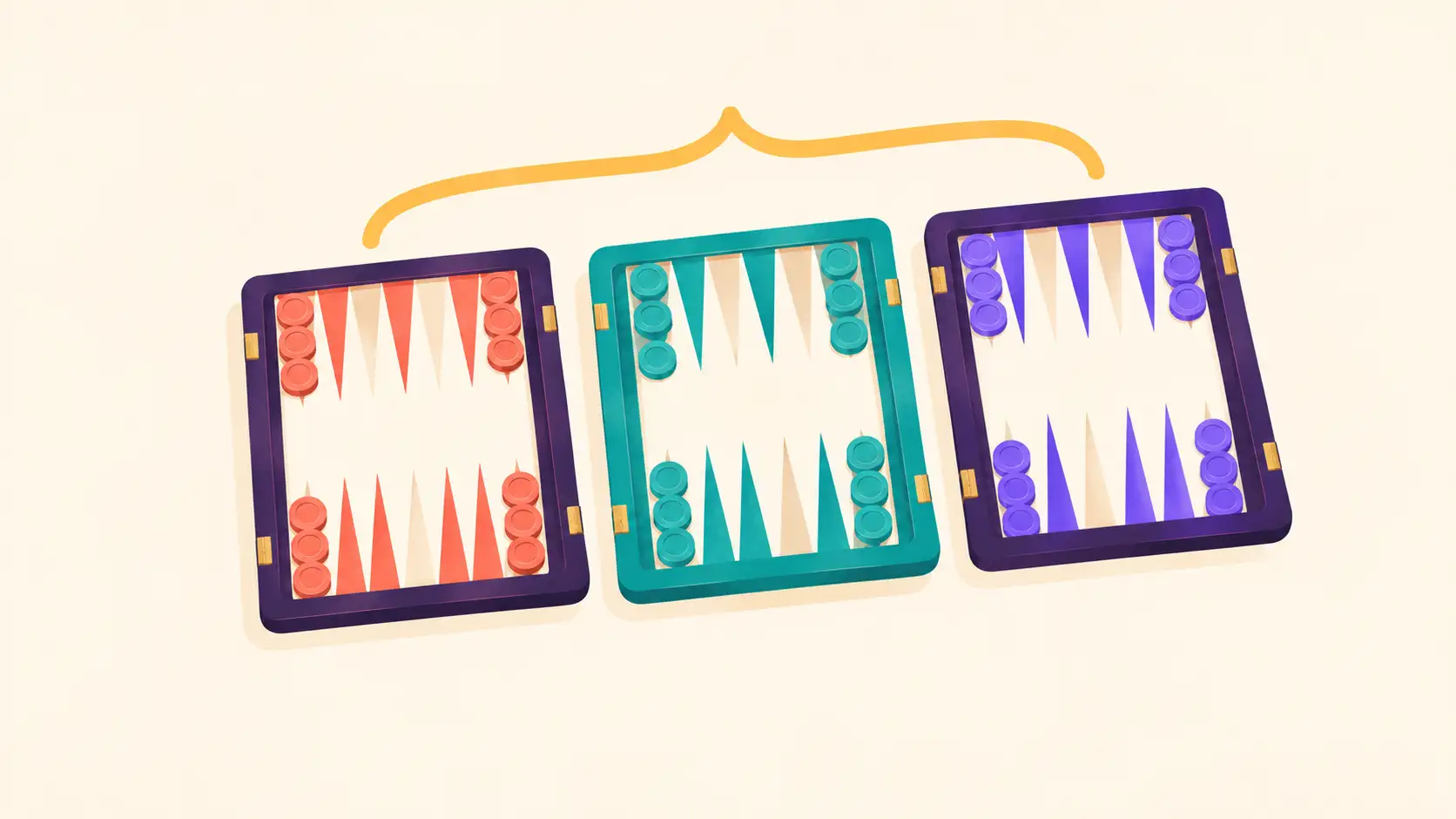
Fevga, Plakoto, and Narde: how the variations differ
One board, fifteen checkers, two dice — and three different games. Direction, contact, and placement: what changes from variant to variant and why.
-
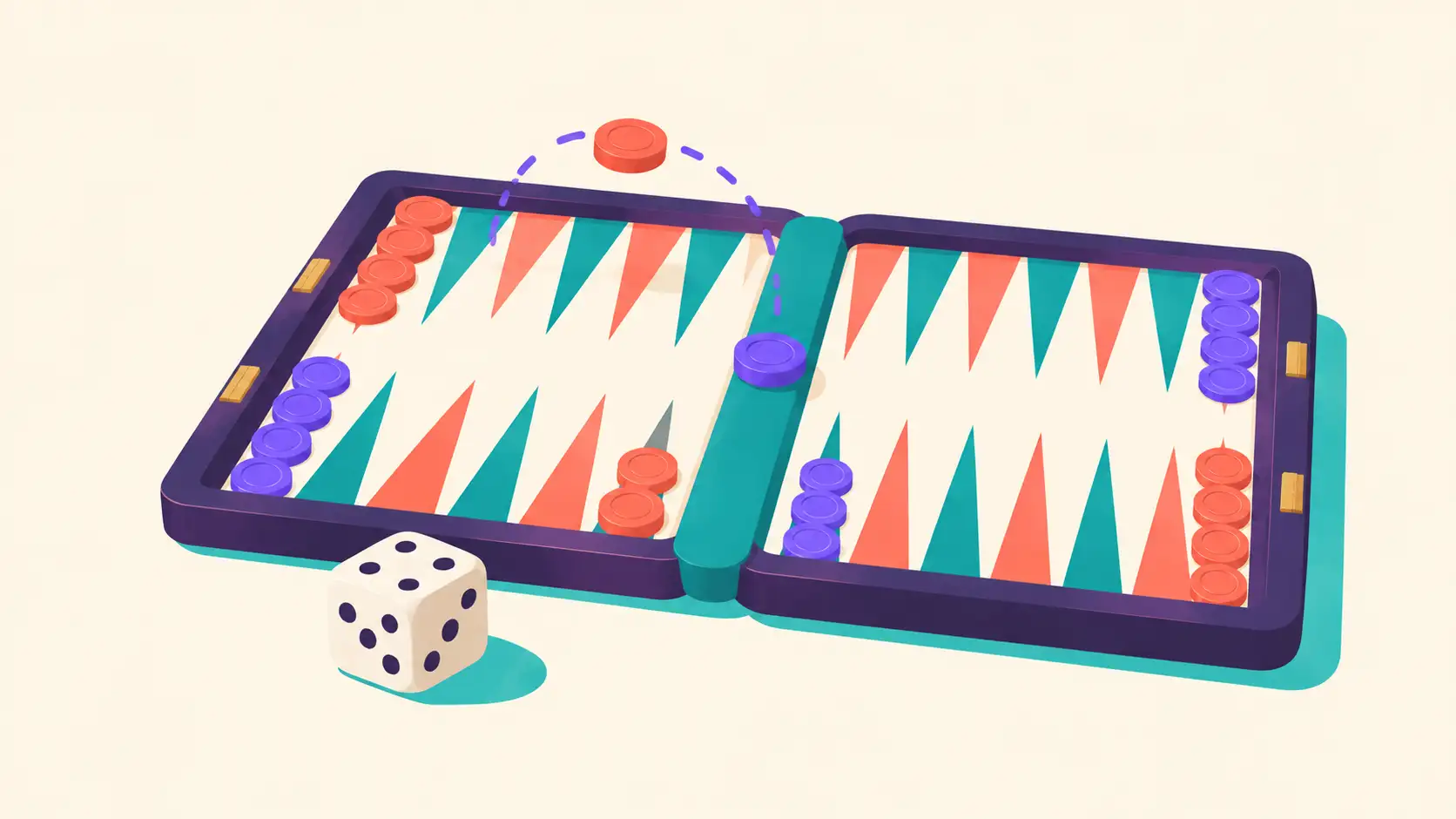
Backgammon: Rules
How to play backgammon — setup, moves, hitting and the bar, bearing off, the doubling cube and how points are scored.
-
Backgammon: doubling cube and match play
How does the doubling cube work, what does it mean to own the doubling cube, how much does winning a match and a money game cost, and why are the Crawford and Jacoby rules needed.
-
Backgammon: Glossary
The terms of backgammon — blot, anchor, prime, bar, doubling cube, gammon and backgammon — defined, with their Russian and Turkish equivalents.
-
Narde and backgammon: a history
Five thousand years of playing dice and checkers — from Ur and Rome to the doubling cube, 1970s fashions, and neural networks that play better than humans.
-

Backgammon: strategy and game plans
How a game plan is chosen — racing, attacking or priming, why the five-point is worth more than any other, when doubling is right, and why the correct play changes with the match score.
-
Skill or luck: what decides a game of backgammon
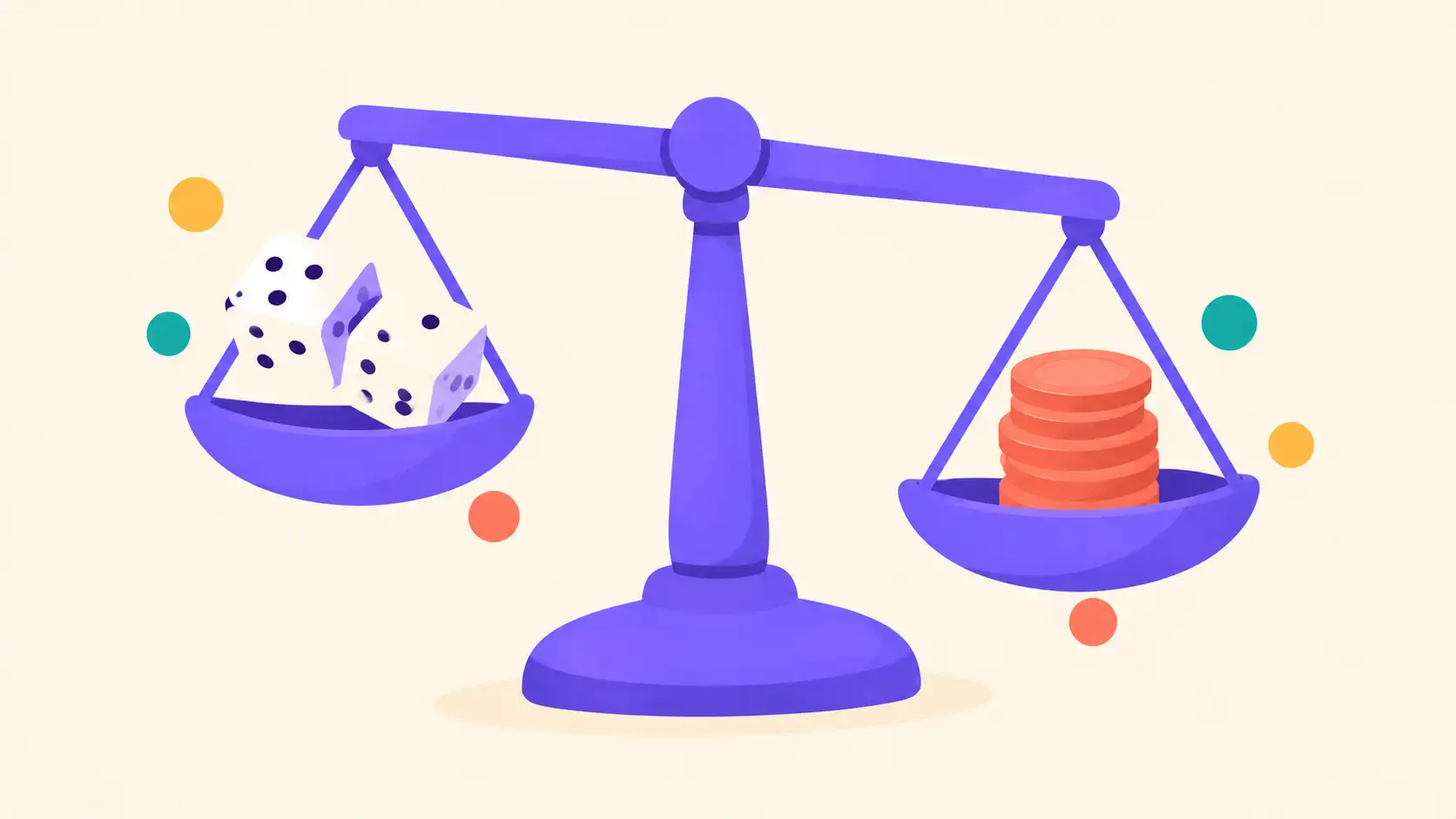
The short answer is both, on different scales. Over one game the dice can outweigh a difference in class; the longer the match, the less any single roll weighs in the result — and here is what that difference is made of.
-

The backgammon opening: the best play for every first roll
Fifteen first rolls and the best play for each: the five-point, the bar point, the running rolls, and the three cases where nobody agrees.
-
Entering from the bar: what each closed point costs
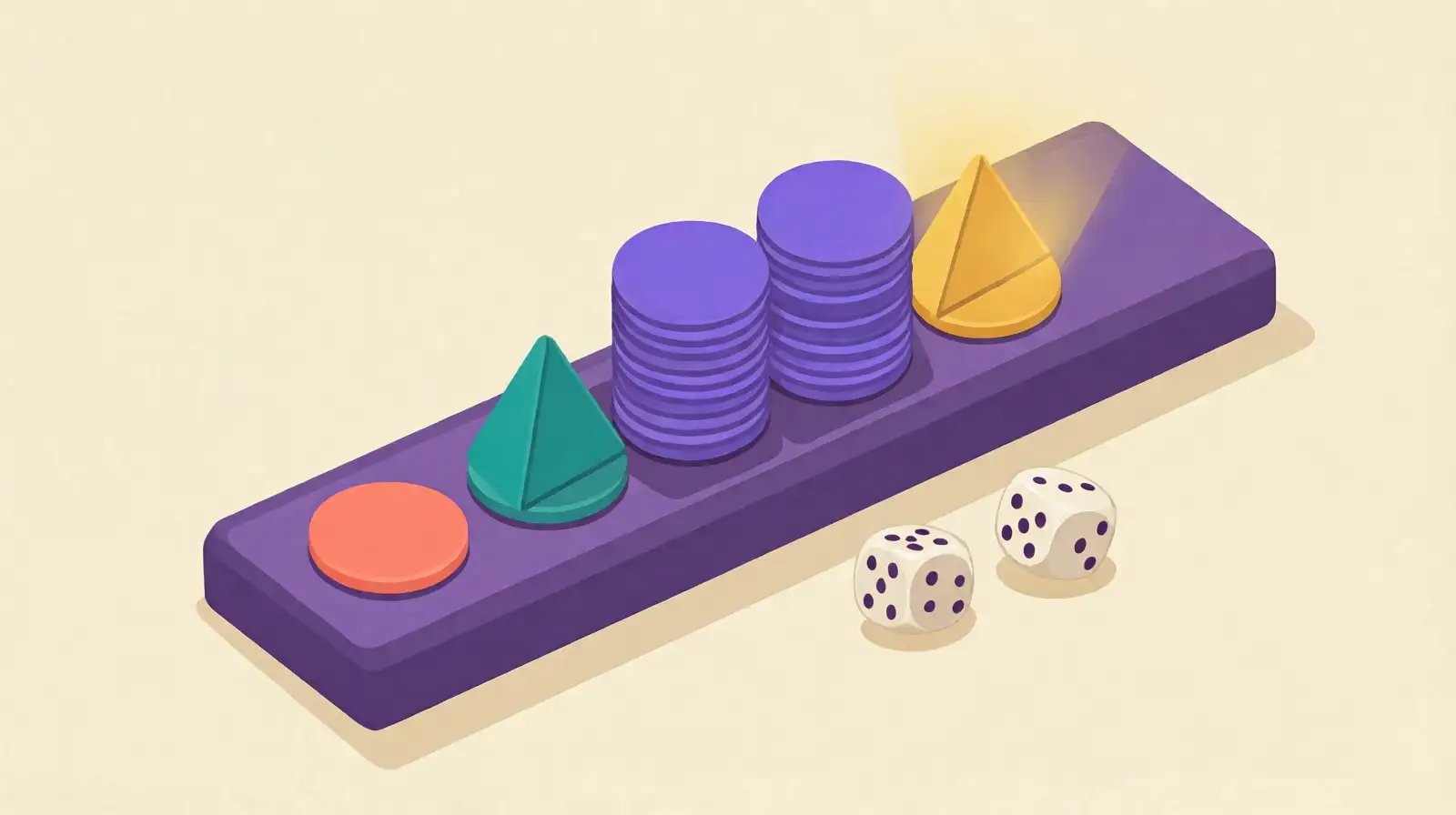
Your checker is hit, and until it comes back nothing moves at all. How many of the thirty-six rolls bring it in, how each closed point gets dearer, and why the sixth one costs eleven.
-
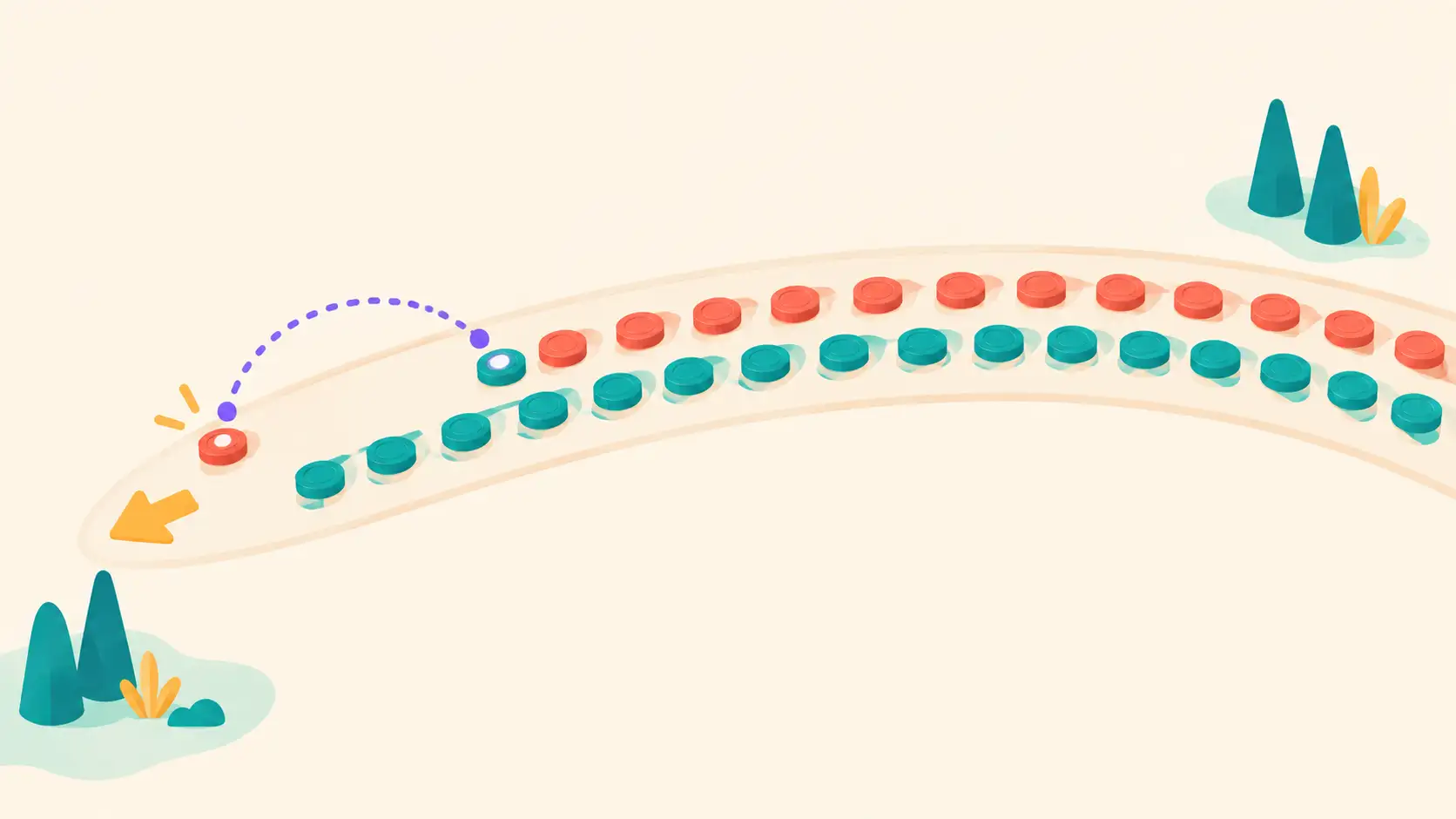
The pip count in backgammon: how the race is counted, and why
Five ways to count who is ahead: the straight count, the reference point at 167, cluster counting, half-crossovers, and counting the difference. When the number decides everything and when almost nothing.
-

Bearing off in backgammon: how a won game is lost
The last phase of the game, and the one where wins most often slip away: when to start bearing off, how to bring checkers home, what to do while contact remains, and when to double.
-

Chouette: backgammon for three or more
One against the field, a team that consults, and a cube that decides everything: how a chouette works, why the Jacoby rule is required in it, and why it barely survives online.
-

Backgammon software: XG, GNU, and what they do better than people
Neural-network bots are stronger than any player, and that is measured. What XG and GNU Backgammon are, how they differ, where they get it wrong, and how to review your games with them.
-

Teaching backgammon to children and beginners
What to learn first, the mistakes every beginner makes, and why a child can beat an adult at backgammon when they never could at checkers.
-

Backgammon and its relatives: fifteen games on one board
Nackgammon, LongGammon, Hypergammon, Plakoto, Mahbusa, Moultezim, Gul Bara, Acey-Deucey and Turkish tavla — what each changes against backgammon, and why that changes the game.
-

Backgammon books: what to read, and what has aged
Where to start, what to read next, and why part of the classic canon has drifted away from modern programs. The literature itself: Magriel, The Backgammon Book, Robertie, problem sets, magazines.