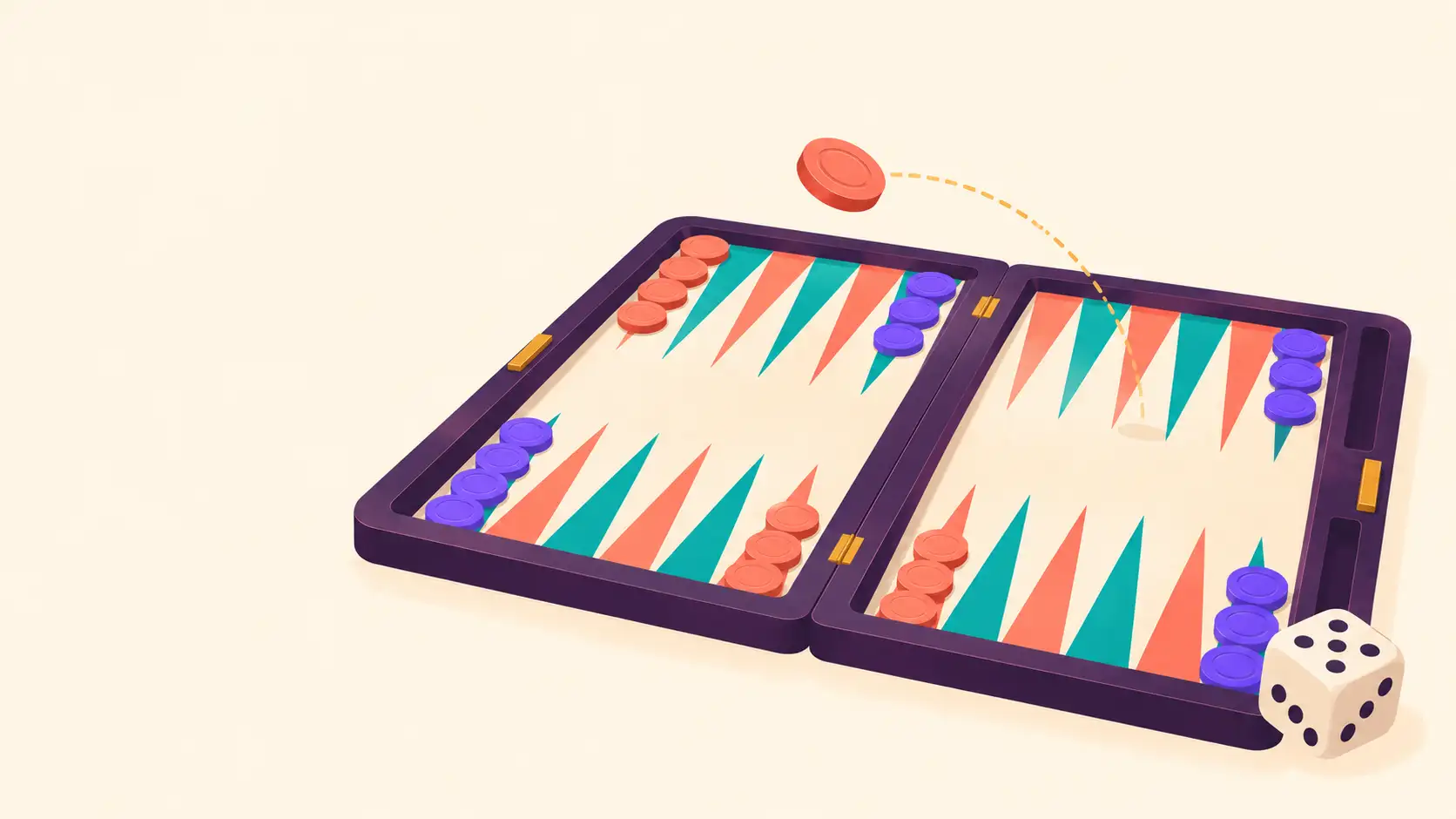
Narde is a two-player board game played on the same board as backgammon, but by different rules. The players never hit each other, they outrun each other: the game is a race, won by whoever first brings their checkers around the board and bears them off.
What you need and how it works
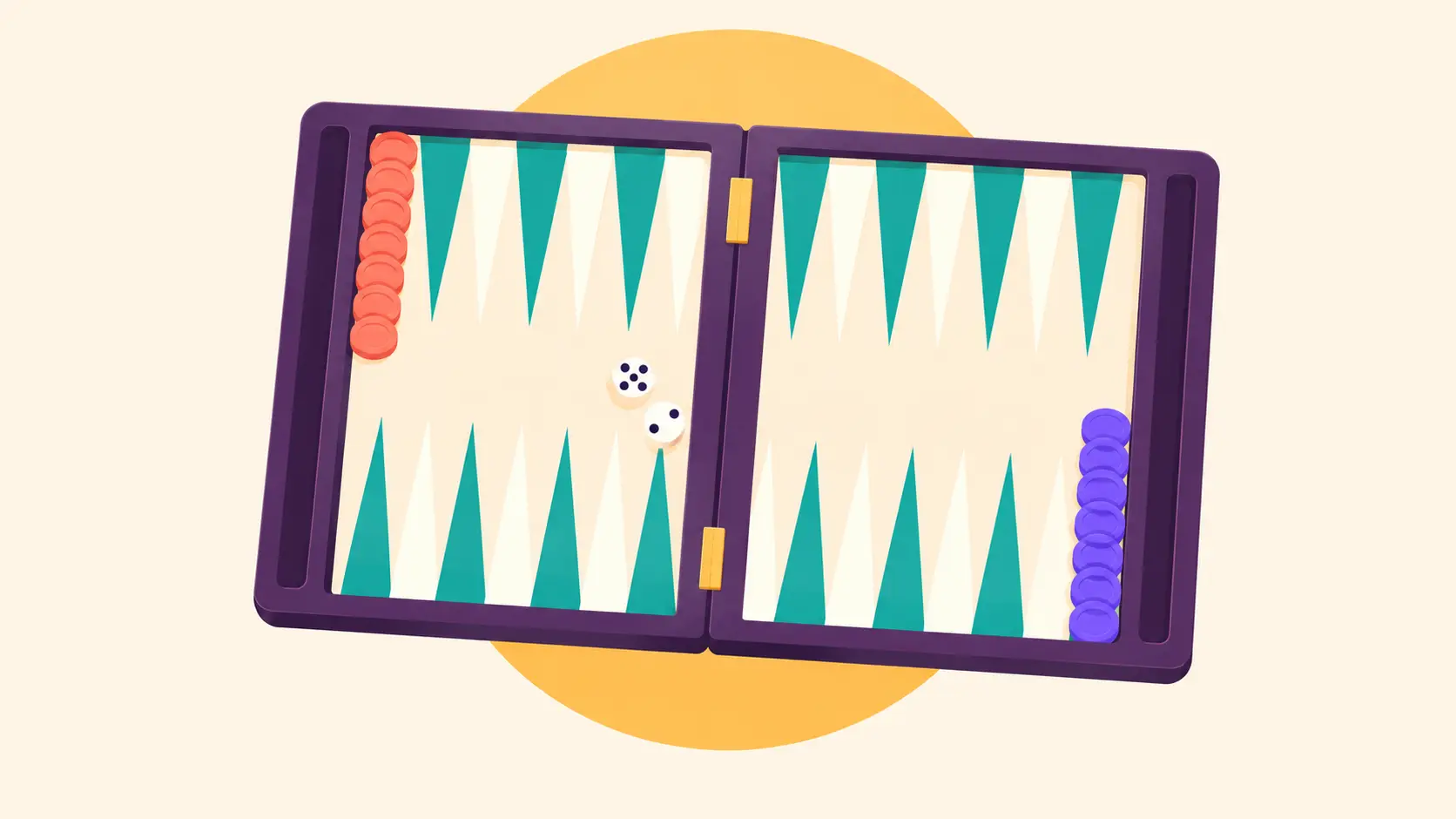
Two players. A board, fifteen white and fifteen black checkers, and two dice. At the start of the game every checker a player has stands on a single point — that stack is called the head, and a move from it is called a move from the head.
Both players’ checkers travel in the same direction, counterclockwise, towards their home — the last six points on their path. Once all fifteen checkers have reached home, bearing off begins.
What makes it not backgammon
The difference is not the board and not the number of checkers, but the rules, and there are three that matter.
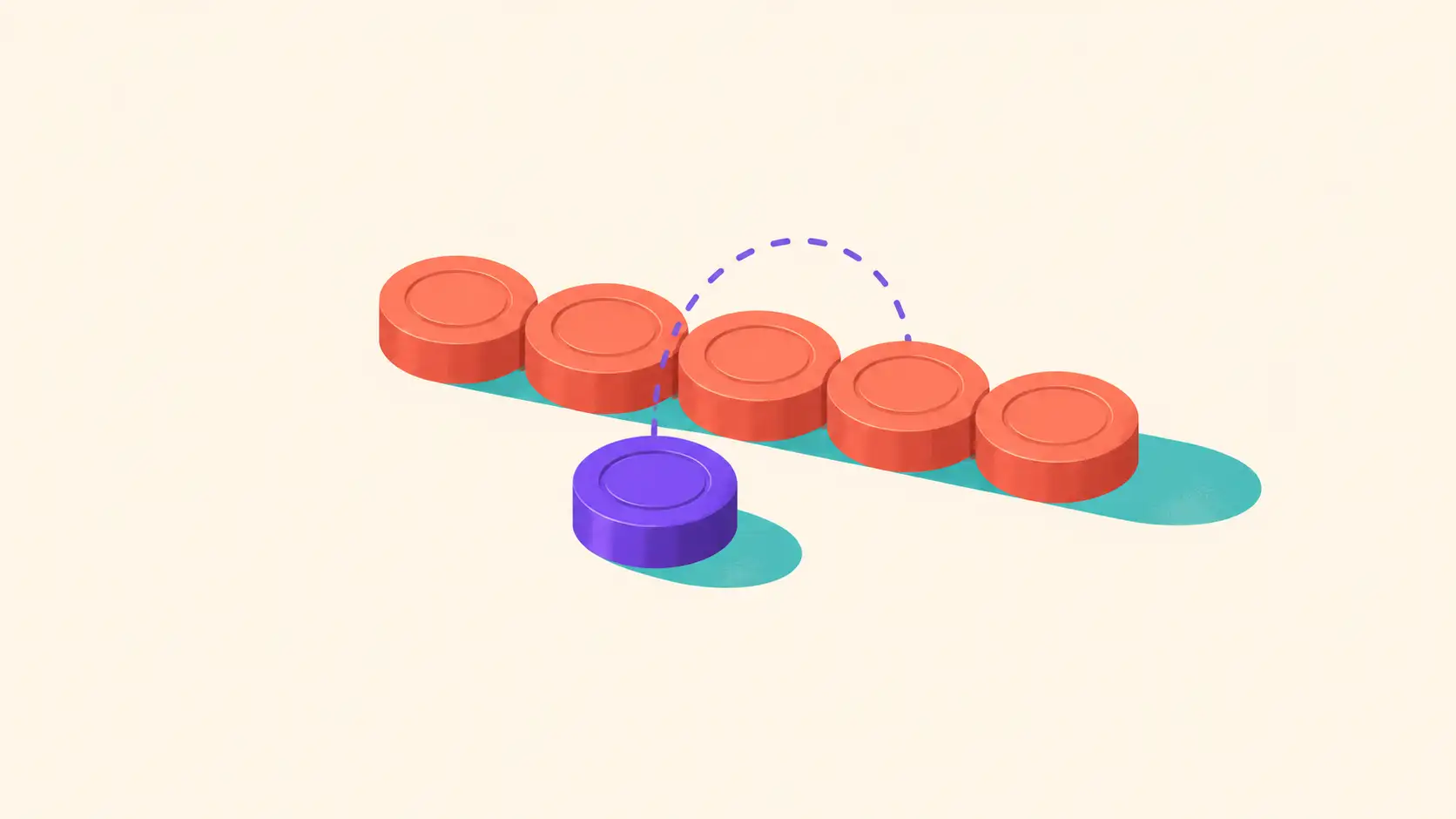
There is no hitting. A point held by an opposing checker is simply closed: you may not move onto it, and you may not knock it off either. A lone checker therefore holds a point as firmly as several do, and the whole struggle is about space rather than exchanges.
Everyone starts from one point. In backgammon the checkers are spread over the board from the outset; here they stand stacked on the head, and only one checker may leave it per turn — apart from one special case on the opening move.
The players travel the same way. In backgammon the opponents move towards each other; here they move in parallel, each around their own circuit.
Hence a different nature of play: Narde is about blocking the road and keeping spare moves, not about hitting an exposed checker.
What a win is called
A win here comes in degrees, and each degree has a name: oin is a plain win, mars is a win over an opponent who bore off nothing. There are names for rarer positions too — home mars, when the loser did bring every checker home but bore none off, and coke, when they failed to move even one checker out of the starting quarter. These two are settled beforehand: in some circles they are separate results, in others an ordinary mars with a name of its own.
→ The Narde glossary, with English and Turkish equivalents
Where the game came from
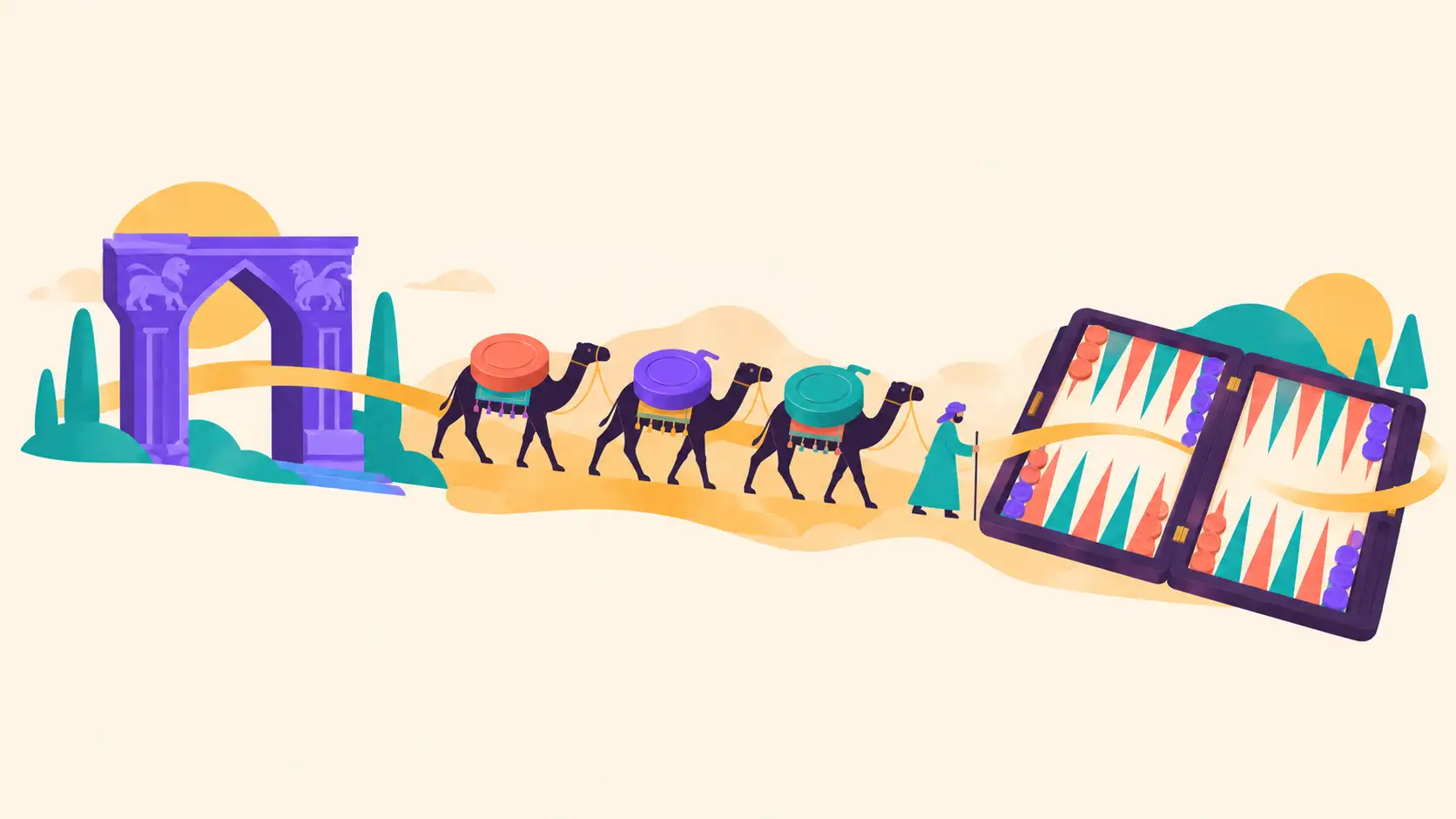
Narde is an ancient Eastern game played for more than 5000 years, and there is archaeological evidence for it: excavations at the Burnt City in Persia unearthed objects from a game set dating to around 3000 BC. Narde most likely descends from the old Persian game Nardshir.
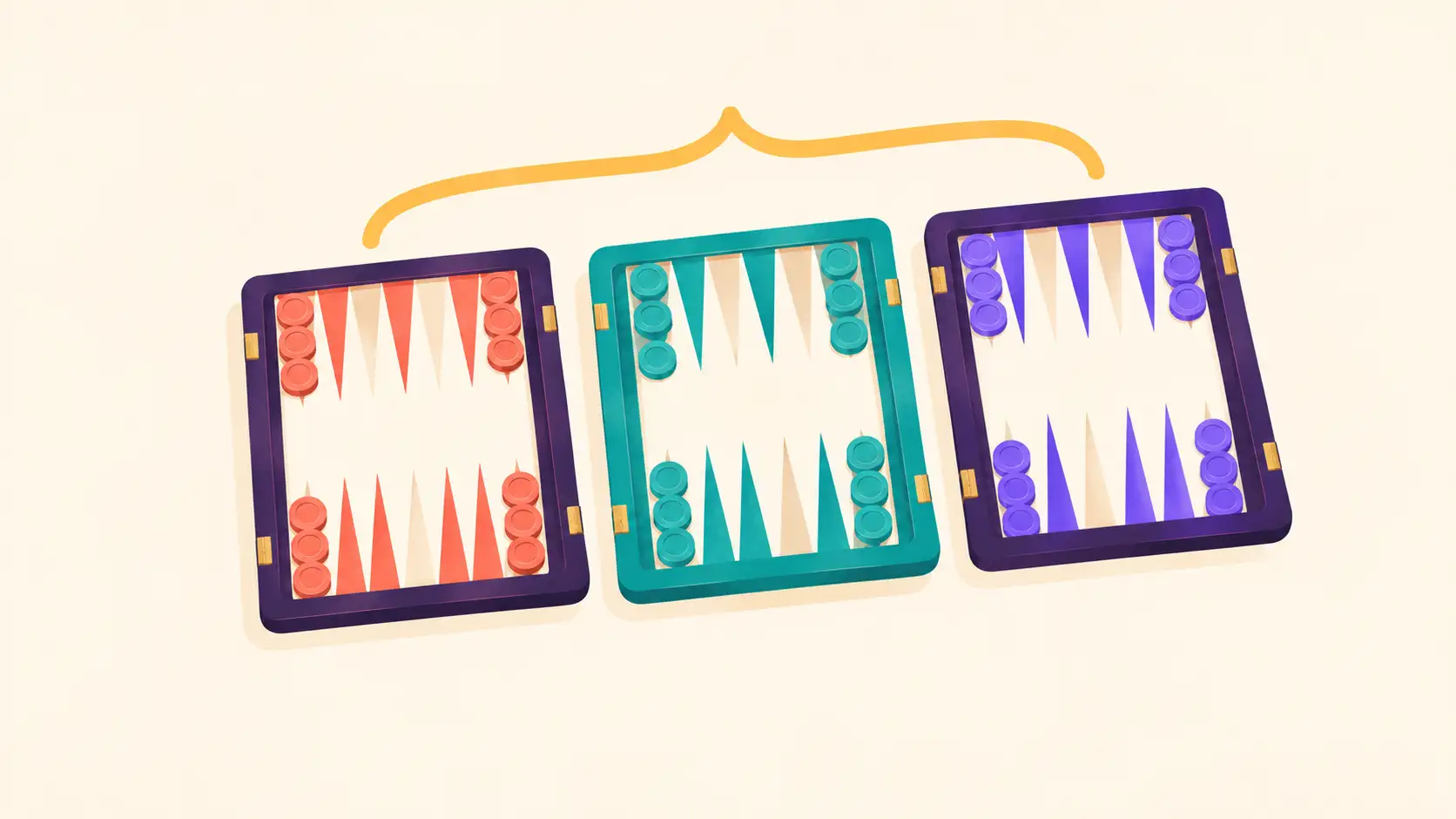
The game has many names — «narde», «nardi», «nard»; in Israel and the Arabic-speaking countries it is called shesh besh, from «shesh» (six) in Hebrew and Aramaic and «besh» (five) in Turkish. Every country calls it its own way.
Where it is played
Above all in Russia, Georgia, Azerbaijan and Armenia; in Armenia nardi is on the list of intangible cultural heritage. The game is widespread across the former Soviet republics, and one of its best-known tournaments is the Azerbaijani championship Gizil Zar, the Golden Dice.
About the name «long backgammon»
The phrase turns up in English texts and it is wrong: it is the trace of a loose translation of the word «narde». In Russian, backgammon is called short narde, and both games are kinds of narde rather than kinds of backgammon. Their rules and play diverge far enough that treating one as a version of the other is wrong on the merits.