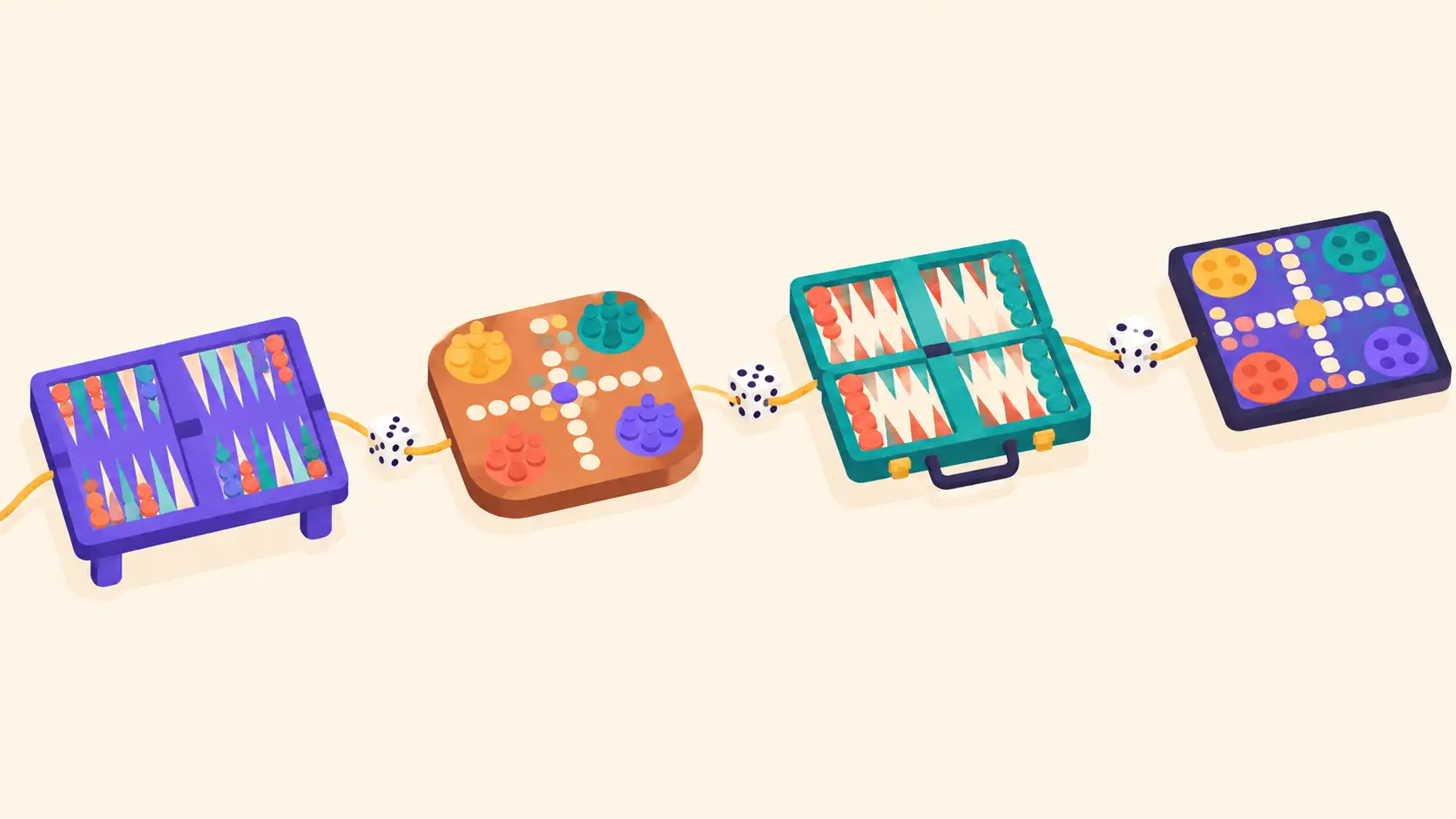
Backgammon is a game for two on a board of twenty-four points: each player moves their checkers into their own home board and bears them off while preventing the opponent from doing the same. In Russian it is called short narde.
How it works
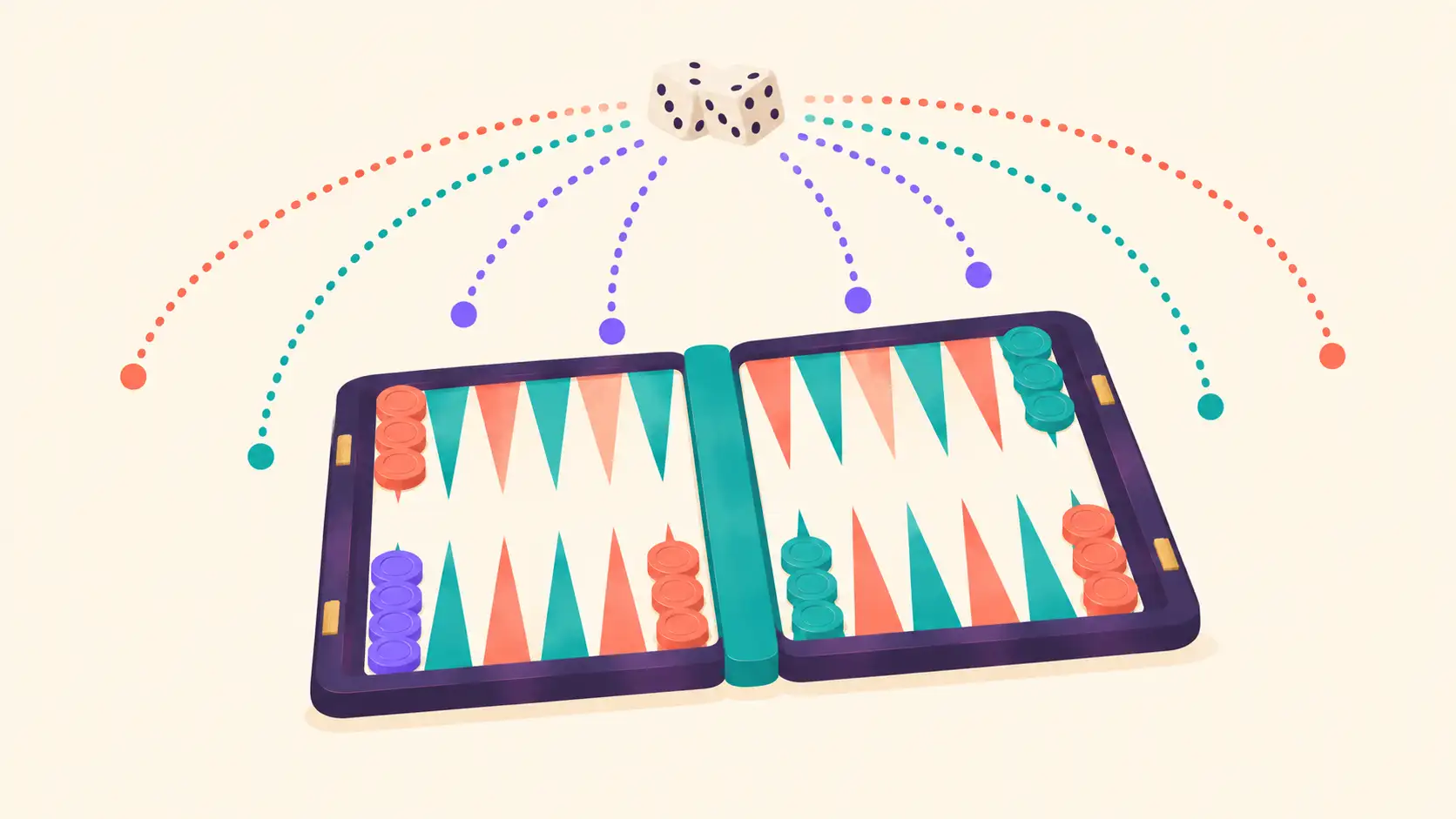
Each player has fifteen checkers of their own colour. The players roll two dice and move their checkers by the numbers shown: one checker by the sum of the numbers, or two different checkers by each number.
The opponents travel in opposite directions: white counterclockwise, black clockwise. Once every checker has been brought around the board and into the home board, bearing off begins.
What makes it not Narde
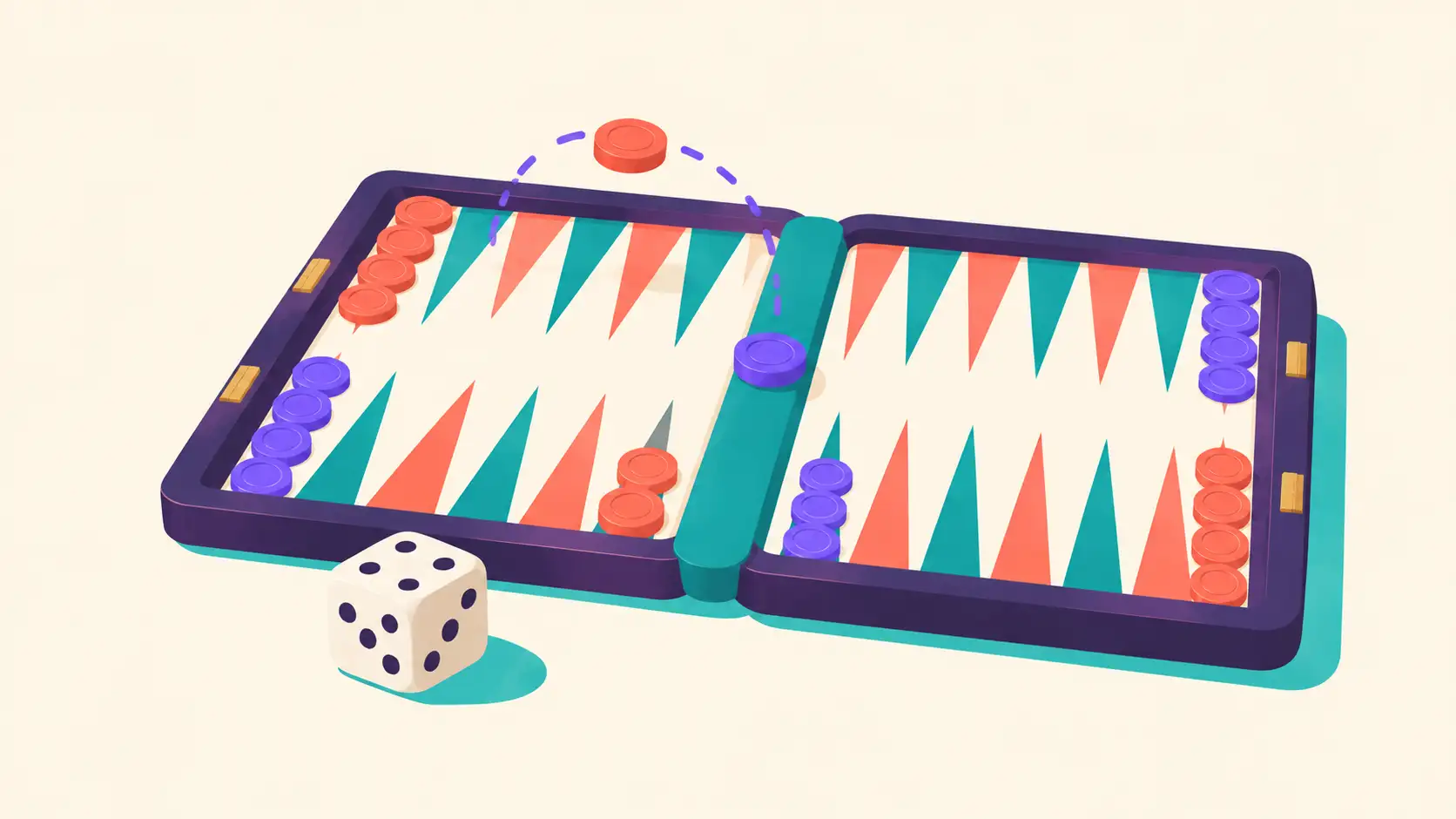
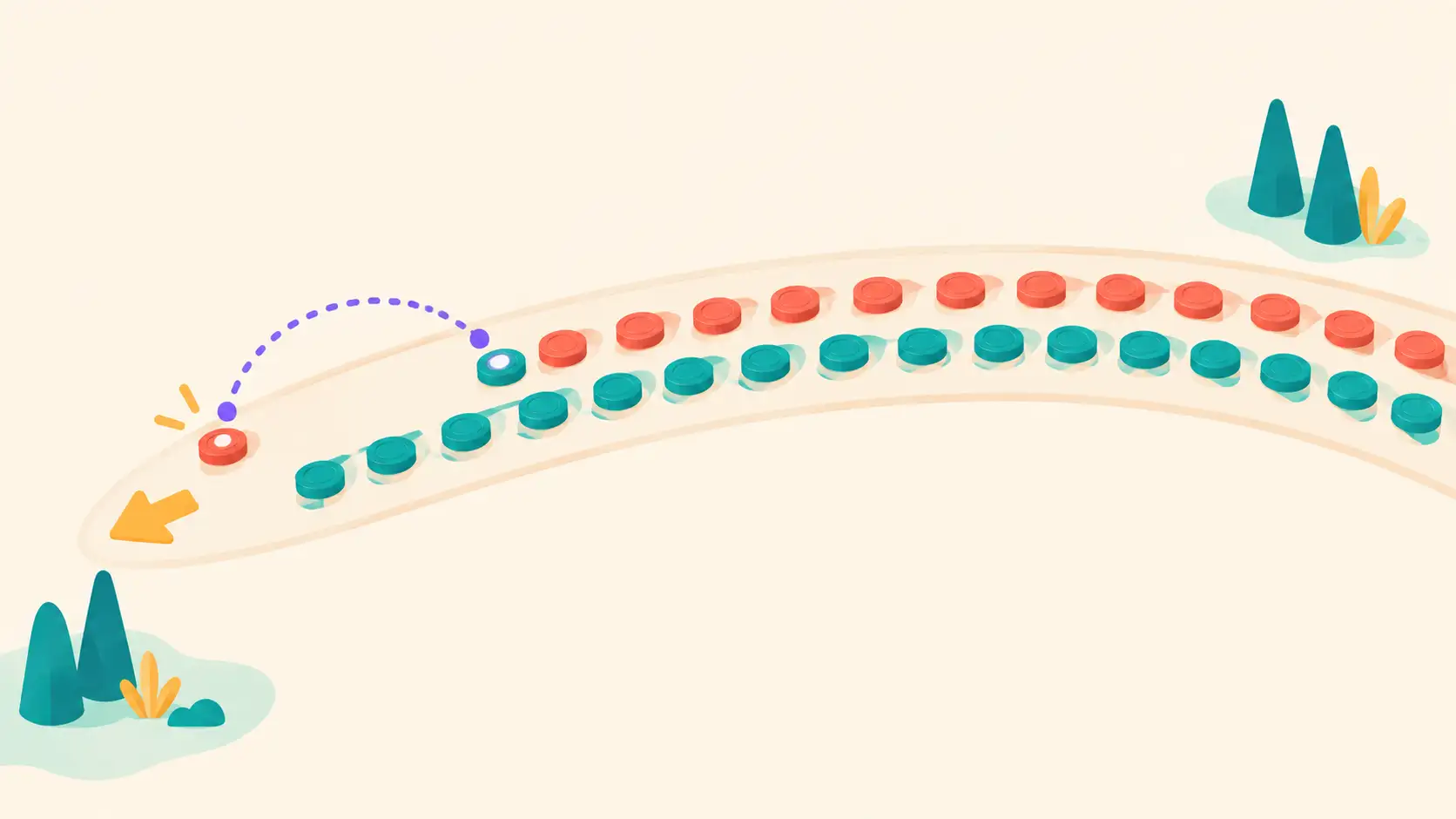
The main difference is hitting. A checker standing alone on a point can be knocked off by the opponent: such a checker is called a blot, and after being hit it goes to the bar, from where it enters the board again and travels the whole way afresh.
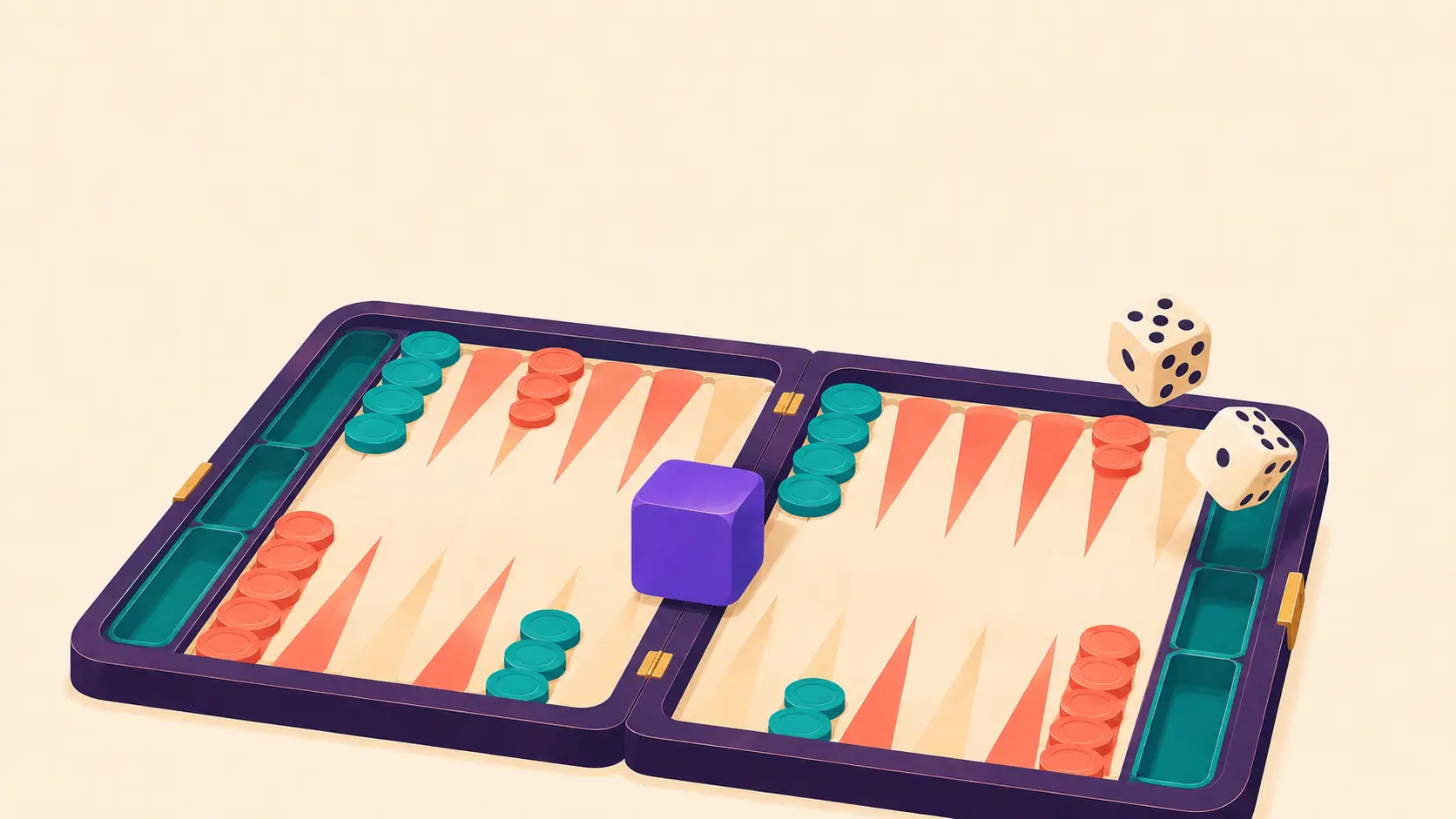
Everything else follows from that: the game is played with contact, not as a race. Hence the anchor — a point in the opponent’s home board held by two of your checkers — and the prime, six consecutive held points that cannot be jumped. The board is divided down the middle by the bar, where checkers that have been hit are placed.
Narde has none of this: there a checker can be neither hit nor trapped.
→ The full rules of backgammon
Stakes and the price of a win
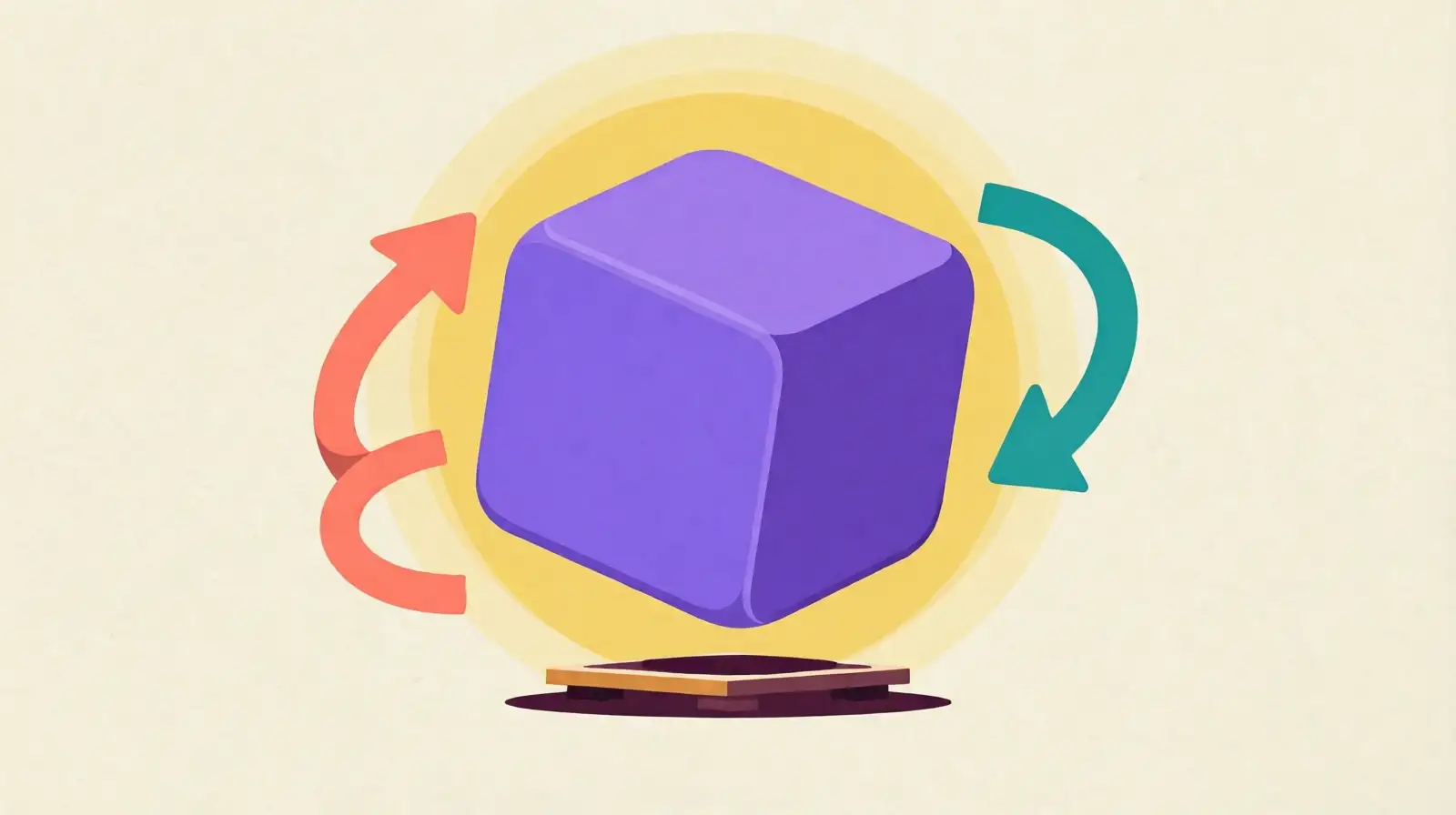
The doubling cube is a special die with the numbers 2, 4, 8, 16, 32 and 64, used to raise the stakes during a game. It is used in both backgammon and Narde.
The price of a win differs too. A plain win is one point; a gammon is two points, when the loser bore off no checker at all; a backgammon is three points, when they also still have a checker on the bar or in the winner’s home board.
Games are usually played not on their own but as a match to a set number of points: the match goes to whoever reaches them first.
→ The backgammon glossary, with Russian and Turkish equivalents
Where the game came from
Backgammon is one of the oldest games known: in one form or another it has been played for more than 5000 years. And it is still played widely: by one estimate there are more than 300 million players worldwide — a rough figure, an estimate rather than a census.
Its modern tournament history begins in the sixties. The first major international tournament was organised by Prince Alexis Obolensky in the Bahamas in March 1964, and the first world championship was held in Las Vegas in 1967; it was won by Tim Holland, who won again in 1968 and once more in 1971. Tournaments still bring players together from different countries.